Grantees represent the Alliance at the 2026 National Comprehensive Cancer Network annual conference
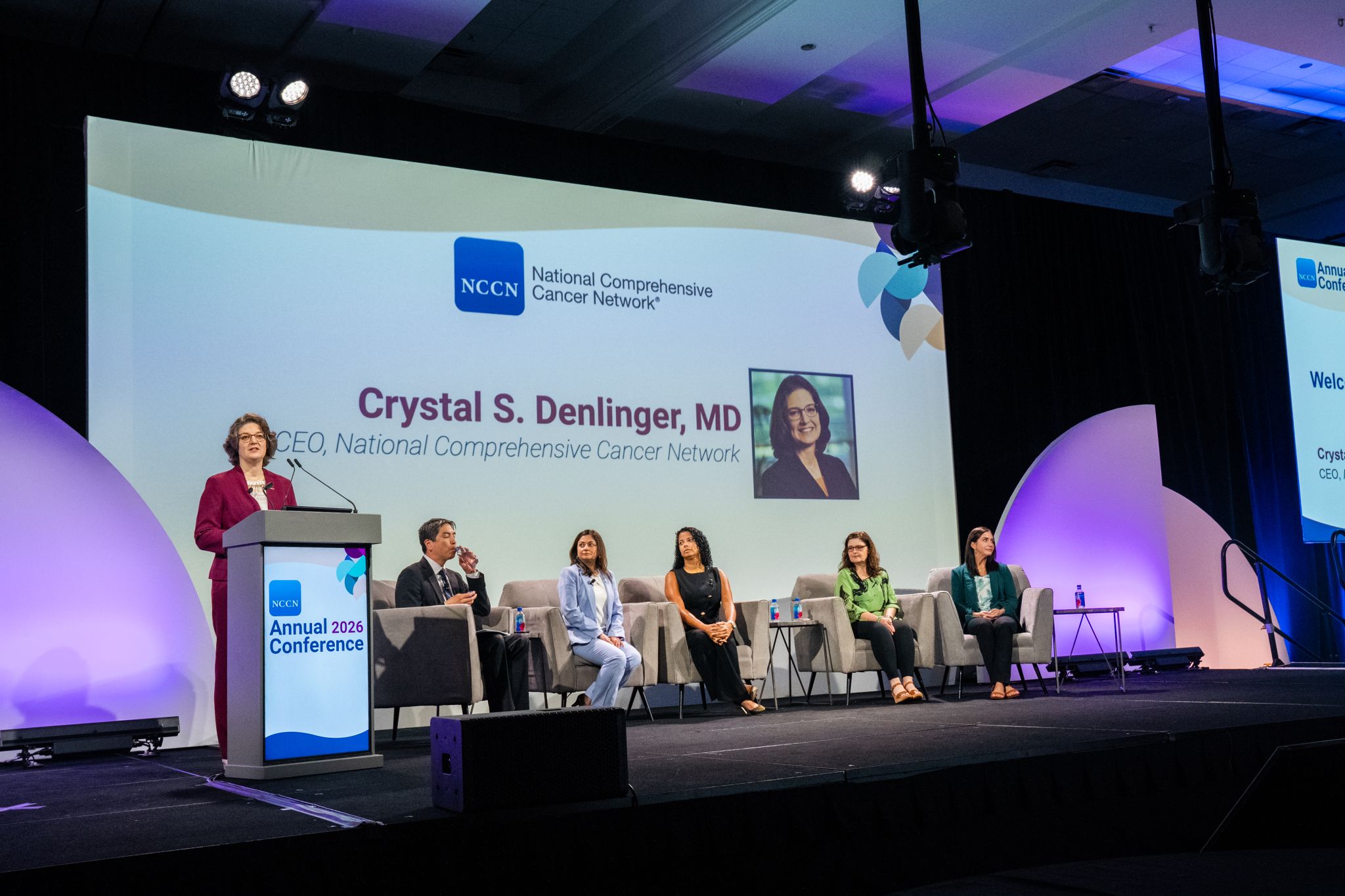 Crystal S. Denlinger, MD, FACP, CEO of NCCN presenting at NCCN Annual Conference (photo by NCCN)
The Alliance for Equity in Cancer Care (Alliance) gathered in Orlando, Florida last month to present work from across the initiative at the 2026 National Comprehensive Cancer Network (NCCN®) Annual Conference. Four of the eight grantees, RWJBarnabas Health, Case Comprehensive Cancer Center, Mary Bird Perkins Cancer Center and NCCN, were in attendance to represent the Alliance.
Over a thousand oncology experts gathered in person to explore the latest breakthroughs in cancer prevention and treatment. NCCN CEO, Crystal S. Denlinger, MD, FACP, expressed her gratitude in a statement, “We gain so much from gathering together to share ideas and best practices, make new connections, and forge new collaborations.” In addition to her leadership at NCCN, Denlinger serves as co-program director for NCCN’s work within the Alliance.
Oncology Experts Discuss Findings
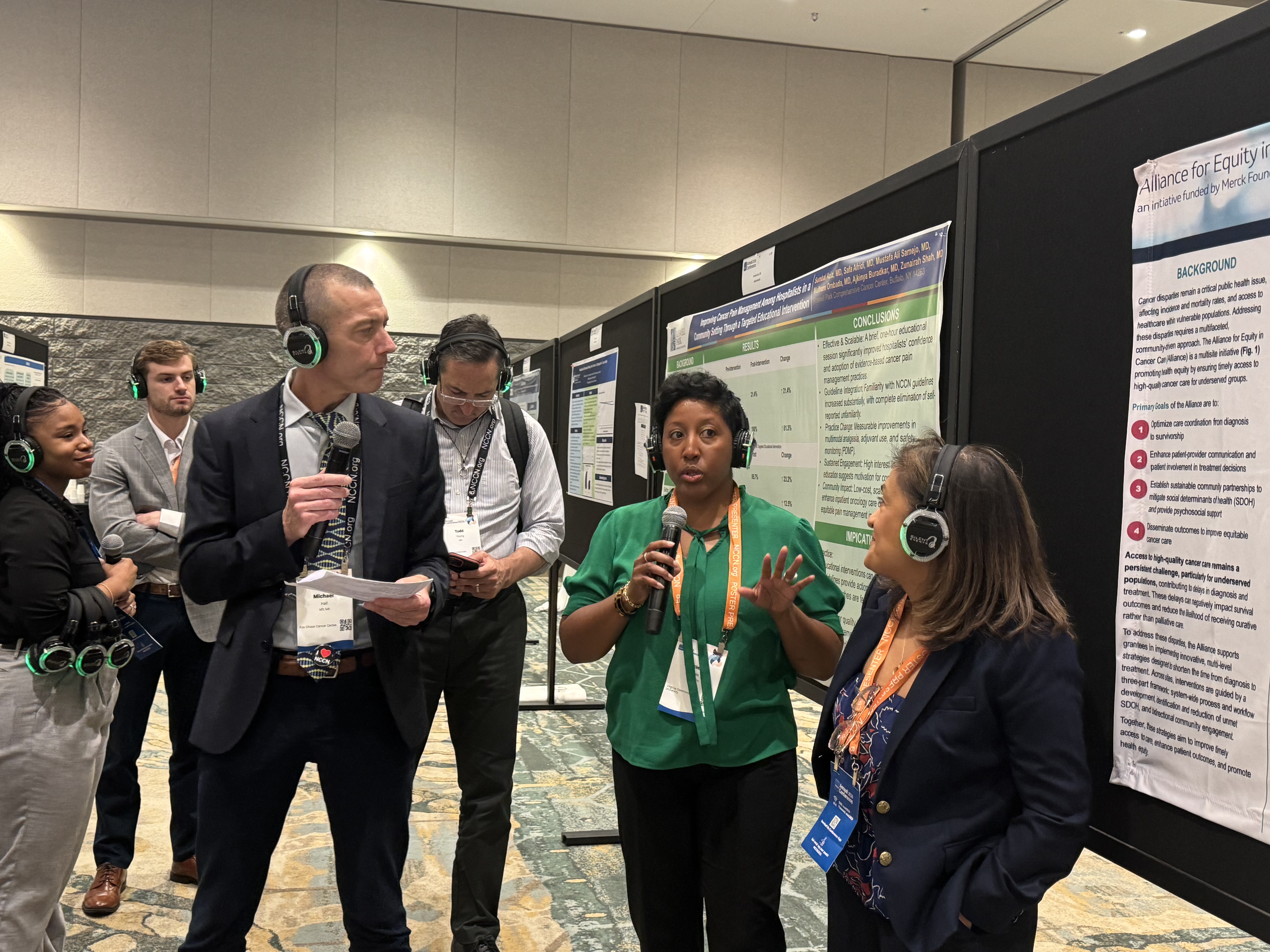 Marcie S. Wright, Ph.D., MPH, Portia Lagmay-Fuentes, MSN, APN presenting during guided poster tour (photo by NCCN)
In addition to sessions on trending oncology topics and the latest clinical guidelines, the event’s poster sessions included hundreds of accepted abstracts and an expert-guided poster tour led by one of NCCN’s renowned oncology experts.
The Guided Poster Tour not only gave our grantees an opportunity to learn from other experts, but to also highlight key insights from the work of the Alliance through one of three accepted abstracts. Out of 309 total posters, only ten posters were chosen to be presented in front of a group of 50 conference attendees. The Alliance abstract titled “Reducing Diagnosis-to-Treatment Times in Cancer Care: A Community-Engaged Approach to Health Equity” was one of those chosen.
The abstract, co-written and presented by RWJBarnabas Health, Case Comprehensive Cancer Center and Mary Bird Perkins Cancer Center, explores how system-level strategies such as workflow standardization can positively impact the time it takes from a patient being diagnosed with cancer to the time of their first treatment appointment. When asked what the most impactful strategy for reducing diagnosis-to-treatment time has been, grantees noted the important role of patient navigation and care coordination.
“By using patient navigators, we can assess barriers and implement strategies to help the patient get to the first appointment faster, such as offering help with transportation,” Jeanne Silva, MSN, RN-BC, CN-BN, CMSRN, RWJBarnabas Health explained. Angela Hammet, MSN, RNC-OB, LCCE, Mary Bird Perkins Cancer Center added, “When the patients arrive at the first appointment, we have them meet with the navigator who helps to guide them through the process – giving the physician updates, speaking with the family, and making sure they all understand the course of treatment.”
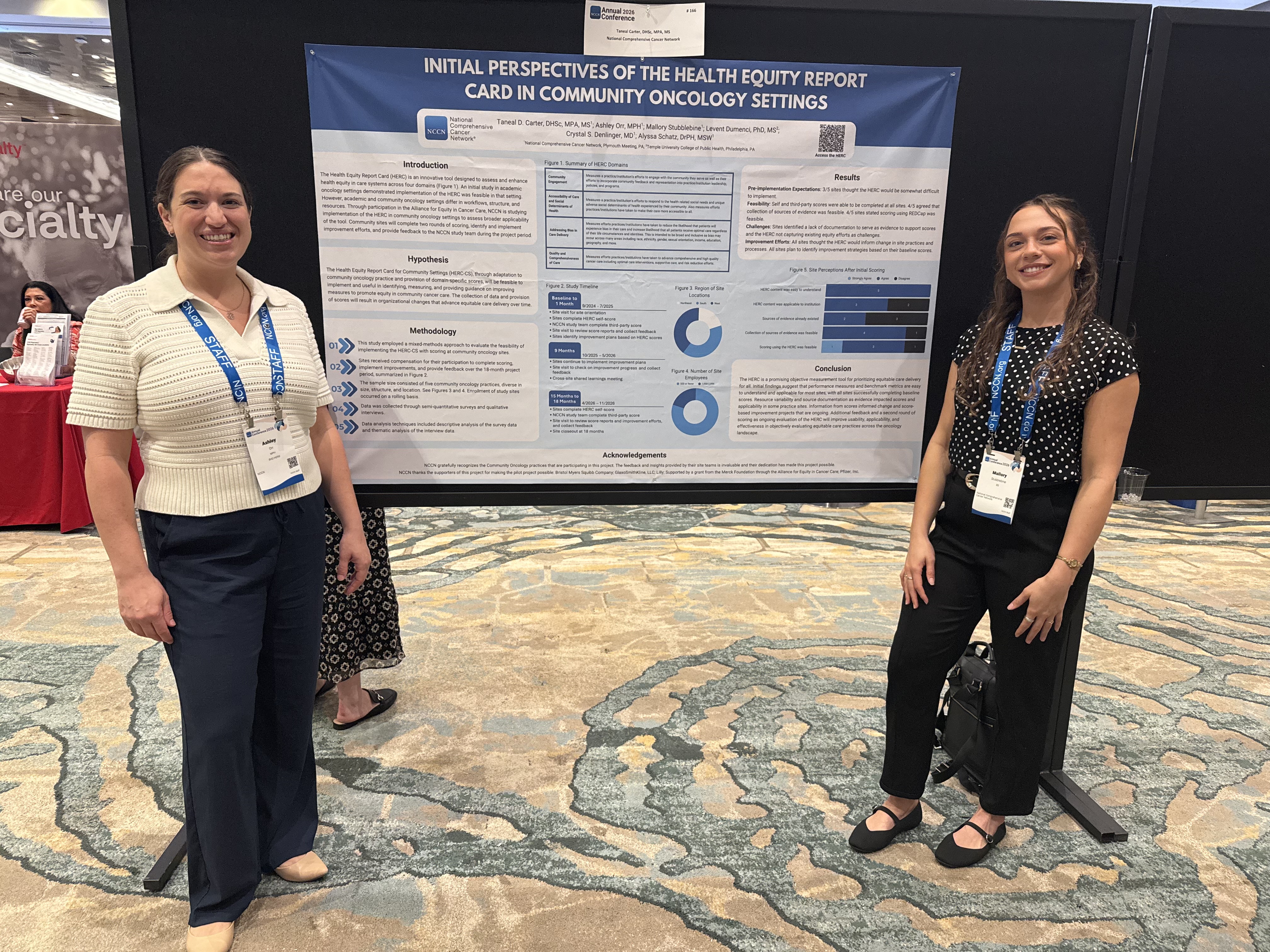 L-R: Ashley Orr, MPH, Mallory Stubblebine with NCCN poster
The Guided Tour also included a poster from NCCN titled “Initial Perspectives of the Health Equity Report Card in Community Oncology Settings.” When asked what the plan for the Health Equity Report Card for Community Settings (HERC-CS) tool is moving forward, Ashley Orr, MPH, NCCN said, “Figuring out how we scale this so that it can become a widely-used tool. We want the HERC to be useful to oncology practices.” After getting another round of feedback at the 15-month mark of the HERC-CS project timeline, “We will be able to draw more attention to the HERC and continue to increase its visibility” said Orr.
The Alliance’s third poster “Advancing Health Equity in Cancer Care through Social Drivers of Health Integration” explored the importance of assessing for social drivers of health and utilizing patient navigators to do so. “Our patient navigators have been instrumental in ensuring that our program is making a difference,” said Nicole Honoré, M.Ed., Mary Bird Perkins Cancer Center. “Our navigators are there with patients from the initial intake all the way through the continuum of care, educating them, addressing any barriers they are facing, and providing the additional resources to ensure they are receiving the type of care that’s needed.”
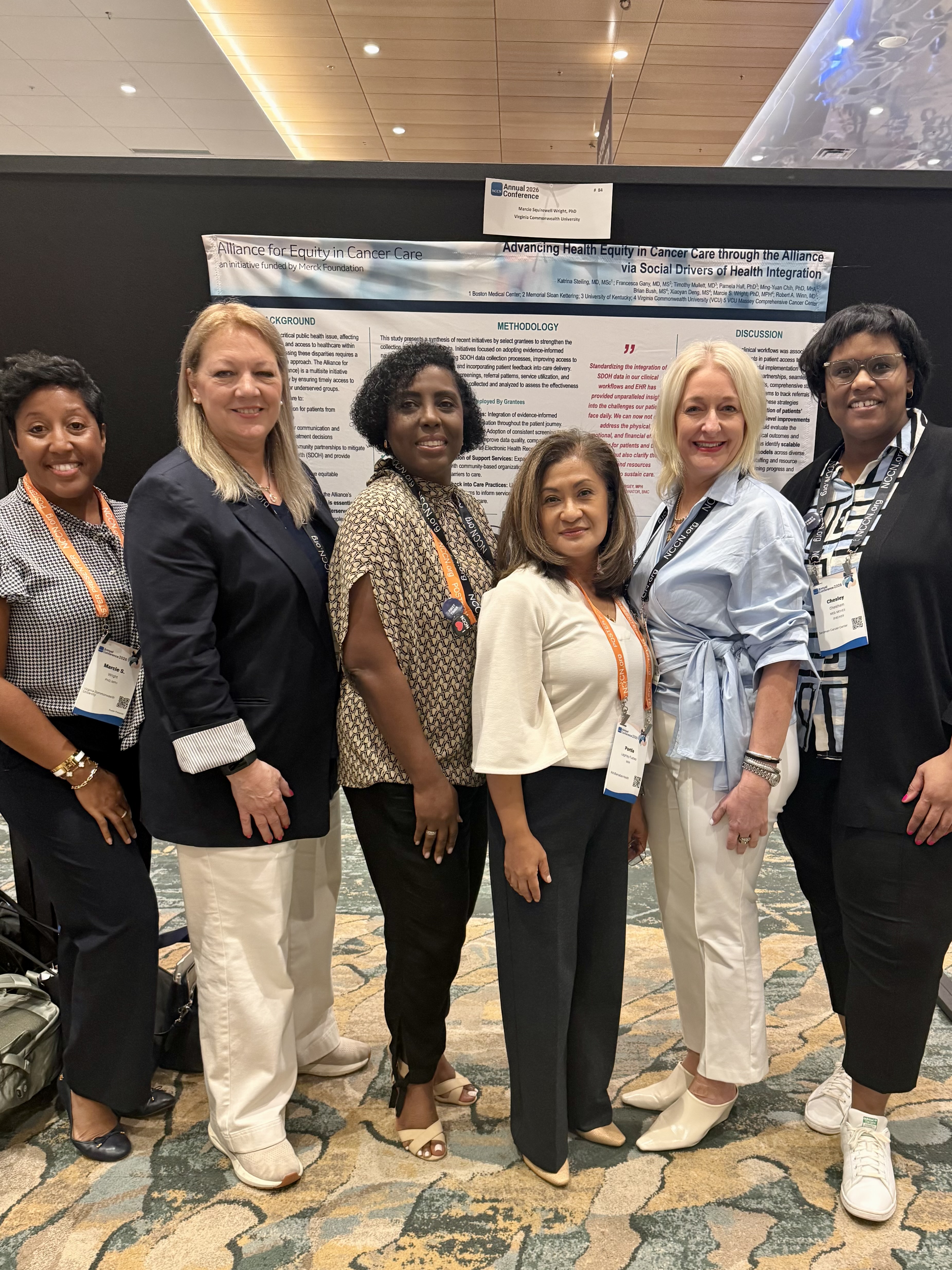 L-R: Marcie S. Wright, Ph.D., MPH; Jeanne Silva, MSN, RN-BC, CN-BN, CMSRN; Nicole Honore, M.Ed.; Portia Lagmay-Fuentes, MSN, APN; Angela Hammet, MSN, RNC-OB, LCCE; Chesley Cheatham, M.Ed., MCHES©
A key takeaway from the poster was that patient-centered care is at the core of health equity. Although coming to a large cancer center can be overwhelming for patients, “Navigation has helped us reduce some of those barriers; to empower patients to ask questions and advocate for themselves,” said Chesley Cheatham, M.Ed., MCHES©, Case Comprehensive Cancer Center.
L-R: Marcie S. Wright, Ph.D., MPH; Jeanne Silva, MSN, RN-BC, CN-BN, CMSRN; Nicole Honore, M.Ed.; Portia Lagmay-Fuentes, MSN, APN; Angela Hammet, MSN, RNC-OB, LCCE; Chesley Cheatham, M.Ed., MCHES©
A key takeaway from the poster was that patient-centered care is at the core of health equity. Although coming to a large cancer center can be overwhelming for patients, “Navigation has helped us reduce some of those barriers; to empower patients to ask questions and advocate for themselves,” said Chesley Cheatham, M.Ed., MCHES©, Case Comprehensive Cancer Center.
In addition to the poster sessions, attendees participated in the inaugural Best Practices for Oncology Program Operations session, which addressed challenges to care, collaborations, AI innovation and policy insights.
Grantee Conference Highlights
When asked about their experience at the conference, Alliance grantees acknowledged the collective impact of the work across the cancer landscape. “Being in the poster hall and looking at all of the programs associated with the oncology experience gives me a sense of professional joy and accomplishment to know that we are a part of that history and impacting evidence as it relates to navigation, to equity, and ultimately to cancer care,” said Cheatham.
Of course the conference was also a place to network with other organizations, but Portia Lagmay-Fuentes, MSN, APN, RWJBarnabas Health emphasized the importance of the Alliance grantees connecting in person. “Without the Alliance, I would have probably never reached out to Mary Bird Perkins to see what work they are doing, but now that has had an impact on RWJ,” she said. “Coming together here with NCCN and my fellow grantees has been the highlight.”
Reflecting on the event, Alliance Deputy Director Marcie S. Wright, PhD, MPH was elated to hear from participants who followed up to learn more about the work of the Alliance. “Moments like this reaffirm the importance of representation at national conferences,” she said. “We not only get to learn from others, but get to further share the important work being done across the country through the Alliance.”