The dual heart of May: How oncology nurse navigators at Academic Medical Centers care for themselves so they can care for others
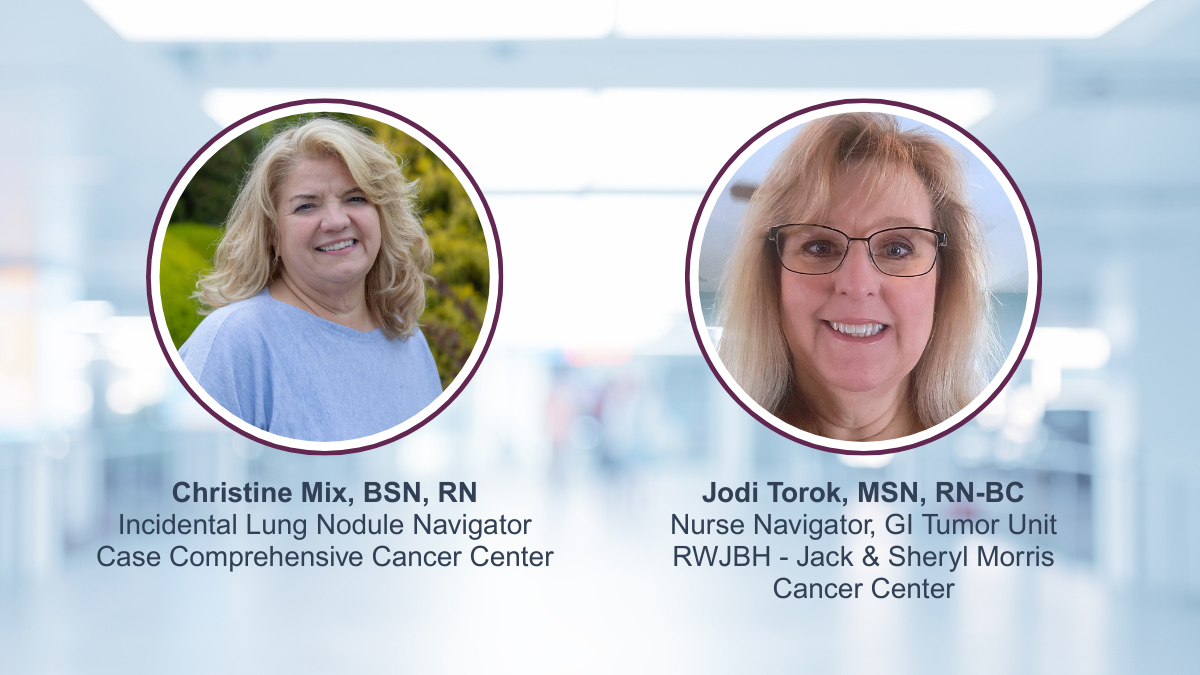
The month of May is a unique time to celebrate oncology nurse navigators and honor the crucial role they play in the patient care experience, while also exploring the importance of navigator mental health and the toll patient care can have on an individual.
In a profession that’s constantly changing due to budget cuts and policy shifts, how do nurse navigators stay mentally consistent and present? According to recent studies, nearly 54% of nurses have substantial symptoms of burnout. As navigators at two Academic Medical Centers (AMC), Jodi Torok, MSN, RN-BC, and Christine Mix, BSN, RN, describe the challenges of being in patient-centered roles and how they juggle their own well-being.
The Role of an AMC Navigator
At the Alliance for Equity in Cancer Care (Alliance), four of the eight grantee sites are embedded within AMCs. These include RWJBarnabas Health (RWJ), Case Comprehensive Cancer Center (Case CCC), Boston Medical Center and the University of Kentucky Markey Cancer Center. As navigators in these settings, Torok and Mix have access to resources that those at community hospitals may not have, such as multidisciplinary care teams. An AMC, as Torok put it, is a “one stop shop” for patients. In-house services at these institutions typically span a range of disciplines, from primary care to social work. Oftentimes, community hospitals operate on a much smaller scale, resulting in clinical staff and navigators being overloaded with responsibilities, and can lack adequate support services to connect patients to within the hospital.
As part of the Alliance, the AMCs are working to make access to cancer care more equitable. Social drivers of health (SDOH) – such as food insecurity, or lack of transportation – can impede a patient’s progress as much as any treatment-related challenges.
At an AMC, the full-team approach would not be complete without the work of lay navigators – a crucial counterpart to nurse navigators. As non-clinical personnel, they are able to work alongside the patient to identify barriers and get them the assistance they may need. At RWJ, lay navigators help connect patients without insurance to resources like charity care.
Oncology nurse navigators can take on multiple roles and responsibilities from one organization to the next, but largely focus on coordinating clinical aspects of care, such as appointment scheduling and treatment adherence. For example, Torok, a nurse navigator at RWJ’s Jack & Sheryl Morris Cancer Center in New Brunswick, New Jersey, is the navigator for the Center’s entire gastrointestinal tumor unit. Torok transitioned into this role after more than two decades of nursing experience. She was one of five individuals to come into the new role and help define what a navigator was for RWJ. “Navigation has definitely made a difference in a lot of patient’s lives, especially ones that don’t have any support, and are alone on this journey,” says Torok.
A nurse navigator can also work with specific patient populations, like Mix, who is an incidental lung nodule navigator at Case CCC in Cleveland, Ohio. Starting as an RN on the floor, Mix chose to transition into oncology after her husband was diagnosed with cancer. Now, Mix helps navigate patients who found out they had cancer through another incident that led them to the doctor, such as a car accident or a simple routine checkup.
Working within an AMC can help significantly strengthen care coordination for patients, but can also become complicated if not organized correctly. At Case CCC, Mix works closely with pulmonologists, thoracic surgeons, primary care doctors and other teams to ensure the patient does not fall through the cracks of the system. Oftentimes this means connecting patients to a primary care doctor that may not be within the Case CCC system, but is easier for the patient to travel to.
Caring for the Patient
When a patient first gets the news that they have cancer, their world flips upside down. At the first appointment, they aren’t just inundated with diagnosis details and treatment plans, they are coming to terms with a jarring reality.
Patients may find themselves feeling bothersome if they complain about not feeling well or need to reschedule an appointment. As a navigator, Torok reminds patients that she is there to be bothered, and encourages patients to share their struggles with her so she and her team can find alternatives.
Because navigators work closely with patients throughout the course of treatment, they are often on the receiving end of the patient’s many emotions. To help, navigators learn and refine de-escalation skills throughout their career. These include reminding the patient that they have taken the first step by going to their appointment, they are safe, and they have a full team of dedicated professionals there to help. If the navigator feels the patient could use more support, nurse navigators can tap into lay navigators, social workers or chaplaincy services as an additional layer of patient support.
While the medical team is there to assist the patient through treatment, family or close friends also carry a great deal of the responsibility. They may be the ones driving the patient to appointments, and helping them with any treatment-related side effects experienced at home. Many caregivers don’t realize that they too are mentally fatigued, and may need support themselves.
Sometimes, though, the patient doesn’t have a support system at all. At RWJ and Case CCC, many of their patients live in marginalized communities, where care is difficult to access. As Mix mentions, some patients experience SDOH such as poverty, homelessness, or even incarceration, and treatment looks a little different. In those situations, it is difficult for all involved, knowing the patient has to take on this experience primarily alone.
Managing the Mental Toll of Nurse Navigation
Cancer care is inherently complex, and while navigation is crucial, the job itself can be draining. Helping patients who don’t have a strong support system, or who are concerned about the negative side effects of treatment, both physical and emotional, can take a mental toll on the team working to help them.
Many navigators feel the weight of their roles, and the guilt of feeling drained, while their patient is the one reeling from a serious diagnosis. But as mental health conversations become less taboo, navigators are reminded of the benefits of taking a step back.
Torok understands the importance from a different perspective. With a background in psychology, and being a charge nurse for many years, she knows that navigators often prioritize their patients’ needs before their own, and don’t always take time for themselves. To help with this, she frequently sets up team “field trips” – short 10 to 15 minute walks to different parts of the hospital or medical campus.
At Case CCC, special mental health resources are available to staff, like classes during Nurses Week. While attending one of the classes, Mix learned the phrase, “I’m done working, but my work is not done.” With the fast-paced, hectic caseload of navigators, the work is never truly finished, but the line has to be drawn somewhere. As Mix says, “This work is important, but so are you.”
Maintaining Work-life Balance
Managing your own well-being is particularly important in patient-facing roles and care environments. It’s also essential to combat the ever-growing risk of clinical burnout. In a society that is becoming more hybrid/work-from-home compatible, the burden of navigators traveling to the office everyday is decreasing. Nurse navigators are able to have downtime throughout the day or after work. For Mix, it's taking a walk with her neighbor. Torok finds activities such as gardening or grocery shopping help take her mind off of work. This downtime breaks up the day and gives navigators the chance to think about their own needs.
Working in patient care is rewarding and difficult at the same time. It is a constant balance of working on the patient’s needs along with the navigator’s own. Knowing there are people around you who have experienced or are experiencing what you are makes the job a little easier. “In order to show up for others, you must show up for yourself first” says Torok.
If you are a navigator, a caregiver or know someone who is struggling with burnout or feeling overwhelmed, there are resources available to help:
- Call, text 988 or chat 988lifeline.org
- National Alliance on Mental Illness
- Substance Abuse and Mental Health Administration
- National Institute of Mental Health
- Mental Health America